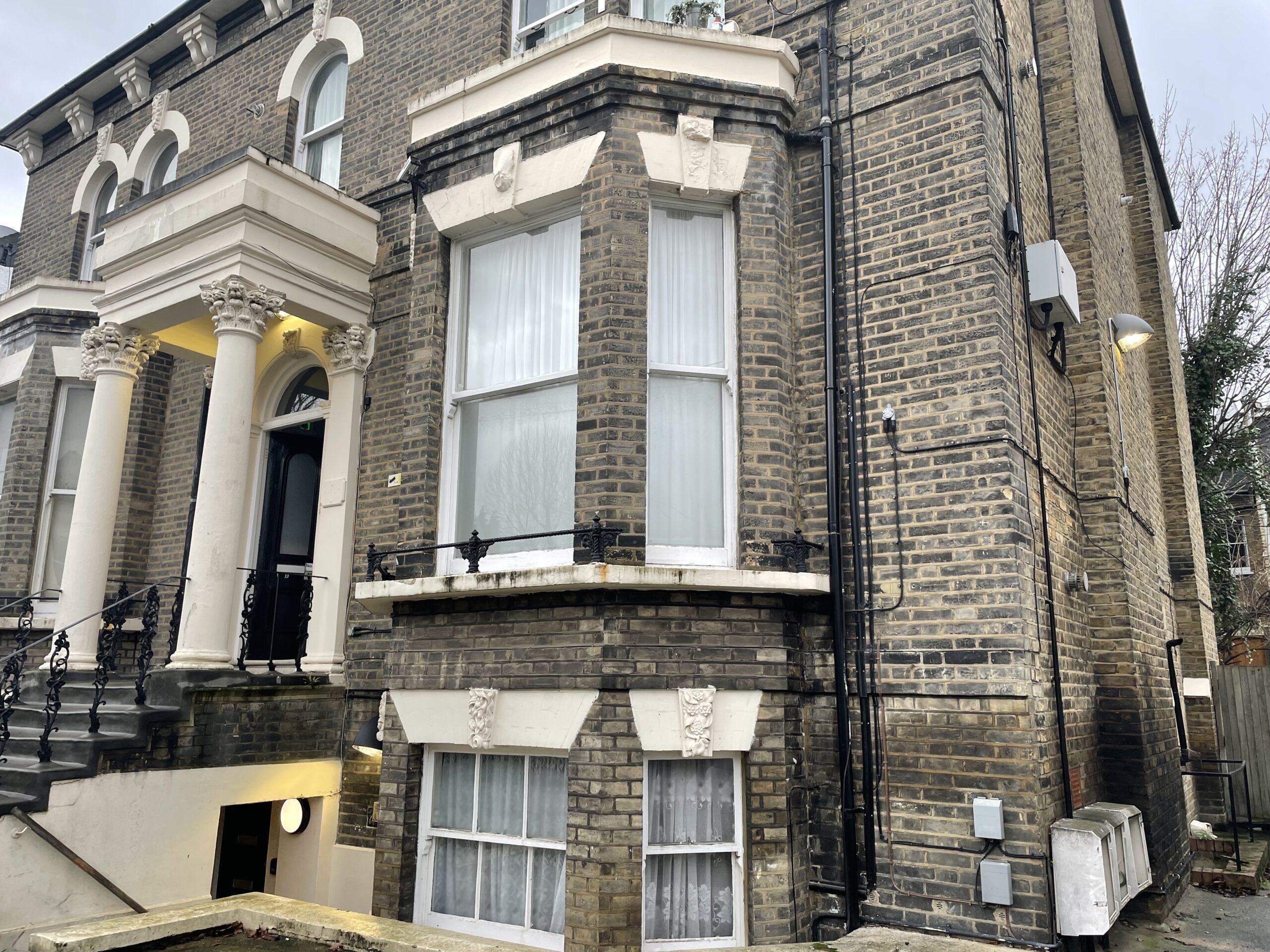
Hyde Group – Bushy Hill Road
United Kingdom
View ProjectSectors
Social housing includes everything from high-rise blocks with open balconies to care homes for the elderly and infirm and each poses numerous challenges for the lighting designer. Good emergency lighting is essential to ensure residents can evacuate calmly and safely in the event of an emergency. Exit routes should be clearly identified with exit signs and each tread on stairs should be clearly illuminated. Fire-fighting equipment should also be lit to a minimum of 5 lux. BS5266-1 recommends that a minimum of two luminaires, or one luminaire and an exit sign with a useable downward element, should be fitted in every section of an escape route.

United Kingdom
View Project
United Kingdom
View Project
United Kingdom
View ProjectUnder the Regulatory Reform (Fire Safety) Order failure to provide a compliant system and failure to regularly test and maintain it can result in prosecution for the employer or building owner who may face fines and imprisonment if convicted. Manual testing of emergency luminaires can be a long and arduous process, which can be open to error. Legally, as required by BS EN 50172, each luminaire must complete a function test once a month and a full three-hour duration test once a year. Performing this process manually requires the engineer to be present to ensure that the luminaire stays lit for the duration of the tests, a time consuming and costly process, especially on large sites.
Self-testing luminaires remove this need and, in its simplest form, the basic requirement is to observe the status indicator to see if the luminaire has failed a test.
BS EN 62034:2012 is the European Standard for Automatic Test Systems for Battery Powered Emergency Escape Lighting. One of the main requirements is that the device must be self-monitoring and that it checks all tests are being performed at specified intervals.
A Philip Payne Specto-XT emergency luminaire will automatically test itself to the specified schedule, and constantly monitor its own performance. Test regimes and other user-defined parameters can be programmed via the website and downloaded to the Gateway.
The web portal retains historic records (determined by local standards) which are displayed in graphical form. These records, together with site documentation, are easily accessible by client authorised users